

Q&A session after a talk: what 39C3 shows speakers
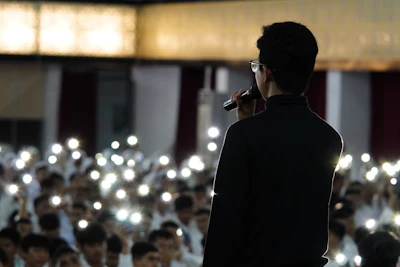
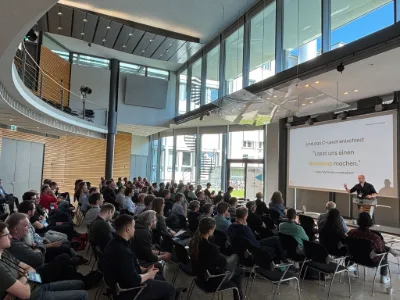
The Q&A session after a talk is the part of an appearance that many speakers hardly prepare, and the 39th Chaos Communication Congress (39C3) in Hamburg shows why that should change. According to netzpolitik.org on 25 December 2025, most talks of the congress, which the Chaos Computer Club has held from 27 to 30 December 2025 at the CCH Hamburg under the motto "Power Cycles", are available as a livestream and, a little later, as a recording on media.ccc.de. For speakers this means that a talk reaches beyond the room, because the questions and your answers reach a second audience as well. Anyone who builds the Q&A firmly into the slot and prepares three answers and a closing sentence stays composed even when the room falls silent or someone makes a statement instead of asking a question.
The Q&A session after a talk is the part of an appearance that many speakers hardly prepare, and the 39th Chaos Communication Congress (39C3) in Hamburg shows why that should change. According to netzpolitik.org on 25 December 2025, most talks of the congress, which the Chaos Computer Club has held from 27 to 30 December 2025 at the CCH Hamburg under the motto "Power Cycles", are available as a livestream and, a little later, as a recording on media.ccc.de. For speakers this means that a talk reaches beyond the room, because the questions and your answers reach a second audience as well. Anyone who builds the Q&A firmly into the slot and prepares three answers and a closing sentence stays composed even when the room falls silent or someone makes a statement instead of asking a question.
The 39C3 in figures: four days of programme, livestream and recording
The Chaos Computer Club describes the congress in the media.ccc.de archive as an annual four-day conference on technology and society held in Hamburg. The information page of the congress gives the period from 27 to 30 December 2025 and links to the schedule, the lightning talks and the media archive. The motto "Power Cycles" is given by the netzpolitik.org editorial team in its preview of the congress, published by Sebastian Meineck on 25 December 2025.
The preview lists five sessions with editorial involvement. Two of them fall on Saturday, the first day of the congress, namely a talk about Cellebrite in an immigration office at 17:15 and one on chat control at 20:30. On Sunday the live recording of the podcast Off/On follows, on Monday a talk on Palantir and on Tuesday the session "Security Nightmares". A meet-up with the editorial team takes place on Sunday at 13:30 in front of the broadcast centre. For speakers, another sentence of the preview matters: most talks are also available as a livestream and, a little later, as a recording at media.ccc.de.
The congress schedule lists entries of 40 and 60 minutes, and the lightning talks run as blocks of two hours. On the information page the organisers advertise the lightning talks with "Your five minutes of fame!". Whether the length of an entry includes the questions is not stated in the schedule.
What a Q&A session after a talk is and why it belongs to the slot
A Q&A session, in German a Fragerunde, is the part of a conference appearance in which the audience asks questions and the speaker answers. It follows the talk and shares the same slot with it, which is why it belongs in your time planning. How long a slot usually is at conferences is described in How long is a conference talk, and which formats exist besides the classic talk is covered in What formats are there at a conference.
A congress like 39C3 shows what a Q&A means for speakers. A talk that is streamed and recorded can reach more listeners than the room has seats, and whoever watches it later can also hear the part in which you answer a question. Whether the Q&A is part of the recording at your appearance is decided by the organiser, and you clarify it before the date, because you will then prepare your answers for different ears.
Planning a Q&A session after your talk: how to calculate the time
Time for questions exists only if you reserve it in the slot. Assume you have a slot of 30 minutes and plan 20 minutes for the talk, which leaves ten minutes. One minute of that belongs to your closing sentence, so that the last impression comes from you and not from the last statement from the floor. Nine minutes remain. At an average of 90 seconds for a question and its answer, that makes six questions.
This calculation is an example with assumptions, yet it shows what happens in practice: if you speak just two minutes longer than planned, two questions are lost, and if you speak five minutes longer, the Q&A shrinks to three questions or fewer. Anyone who builds the talk to 18 instead of 20 minutes buys a buffer for the most valuable thing that happens in the room after a talk: a conversation with someone who wants to know something. How a conference day runs as a whole and where delays arise is shown in How does a conference work when you are a speaker.
Questions in a livestream: serving the room and the stream at once
In a talk with a livestream, two groups listen: the people in the room and the people at their screens. Someone who asks a question in the room speaks into a microphone or into the room, and only as much of it reaches the stream as the technology picks up. If you repeat the question in one sentence before you answer, everyone in the room and at their screens has a chance to follow your answer, and you gain two seconds to think, which separate an answer with substance from a reflex. It costs you one sentence.
The same applies to recordings. Whoever watches the talk three months from now does not know the question from the room and hears only your answer. A brief repetition turns every answer into a self-contained passage that is clear even to someone who was not there and that a colleague can forward.
Five steps for a Q&A session after your talk that starts conversations
At a specialist conference the Q&A is more than an appendix, because questions reveal who in the room is working on your topic. In Who sits in the audience at an industry conference we describe how differently audiences listen, and whoever asks a question often has a concrete problem on their mind. Five steps are enough for the process:
- Plan the Q&A in the slot: reserve the minutes in advance and announce at the start that there will be time for questions after the talk, so that nobody interrupts.
- Prepare three questions that you ask yourself: choose the objections you hear most often on this topic and write down an answer of two to three sentences for each.
- Begin with a follow-up question: if the room is silent, a sentence such as "A question I often hear is ..." helps, and the first contributions usually follow.
- Repeat every question and answer briefly: an answer of 30 to 60 seconds leaves time for further questions and keeps statements without a question within bounds, because you turn them into a question ("If I understand you correctly, the question is ...").
- Close with a sentence of your own and a next step: after the last question, say what you want the audience to take away and where they can find you after the talk, at the stand, in the foyer or on LinkedIn.
The fifth step decides whether the Q&A becomes a conversation. Anyone who leaves the room with an invitation ("If you want to introduce this topic in your company, you will find me at the exit afterwards") gets the follow-up conversations that turn a talk into a channel for winning clients. How to place appearances at industry conferences as a sales route is described in Why the industry conference works so well as a sales channel.
Frequently asked questions
How does a Q&A session after a talk work?
After the talk you invite the audience to ask questions, repeat each question briefly and answer in 30 to 60 seconds. The Q&A usually takes up part of the slot, often the last minutes, and the moderator or you end the session after the agreed time. Your closing sentence follows, so that the last impression comes from you.
How much time should I plan for questions after a talk?
Plan about a third of the slot, which for 30 minutes is around ten, and one minute of that for the closing sentence. At 90 seconds per question and answer, about six questions fit in. Ask the organiser beforehand whether the slot length includes the questions, because programme listings often do not say.
What do I do if nobody asks a question after the talk?
You start with a question of your own that you often hear, for example "A question I am often asked on this topic is ...", and answer it. The first people usually speak up afterwards, because the threshold has dropped. If it stays quiet, you finish with your closing sentence and remain available for conversations after the talk.
How do I handle a statement that is not a question?
You turn it into a question, for example with "If I understand you correctly, the question is ...", and answer that in two sentences. If the statement goes on longer, you offer a conversation after the talk and pass the floor to the next person.
Do I have to answer questions from the livestream?
Whether questions from a livestream are put to the room is decided by the organiser, who tells you beforehand. If there is a channel for it, the moderator usually selects the questions, and you answer as with any other question. Ask the organiser about the streaming, so that you answer the questions in a way that works for both the room and the stream.

Marin Niehues is a management consultant and international speaker. With Niehues Consulting he works with organisations from scale-ups to DAX 40 corporations, and on stage he has collected more than 100 international conference invitations.
All articles by Marin Niehues