

Trade fair talks: what the AUMA visitor study means for speakers
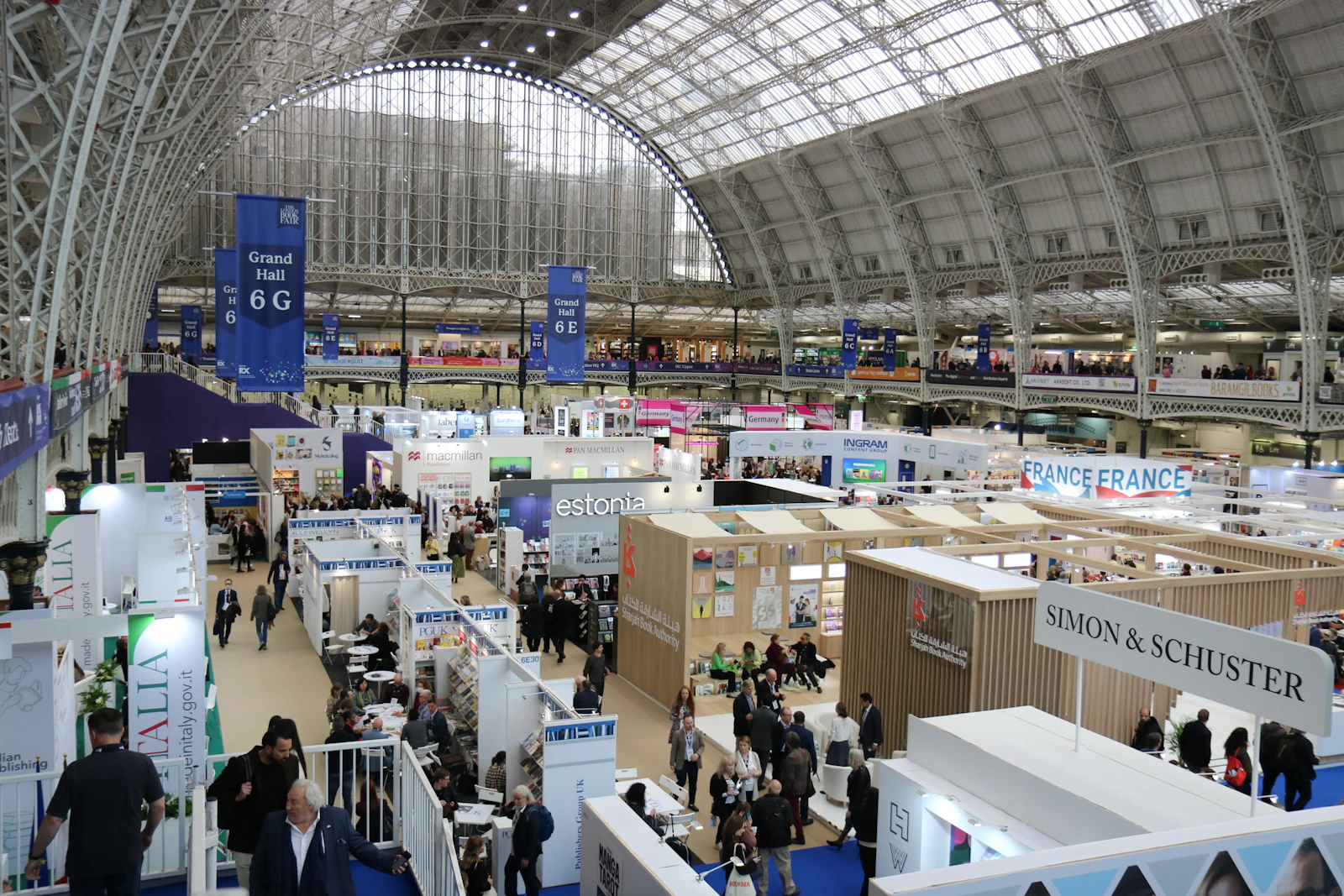
AUMA, the Association of the German Trade Fair Industry, published its study Was Besucher heute von Messen erwarten (What visitors expect from trade fairs today) on 2 November 2026, based on a survey of 1,855 German-speaking trade fair visitors aged 18 to 64. 61.5 per cent of them commit to a visit four weeks or less before the fair, and a personal recommendation is the most common thing that first sparks their interest. For speakers on trade fair stages and expert forums, this means that announcing your talk does the most in the final four weeks and that a personal invitation follows exactly the route by which most visitors first hear about a fair. Because 76.2 per cent of respondents experience unplanned encounters at trade fairs, it is also worth setting aside time at the stand and in the foyer after your talk.
AUMA, the Association of the German Trade Fair Industry, published its study Was Besucher heute von Messen erwarten (What visitors expect from trade fairs today) on 2 November 2026, based on a survey of 1,855 German-speaking trade fair visitors aged 18 to 64. 61.5 per cent of them commit to a visit four weeks or less before the fair, and a personal recommendation is the most common thing that first sparks their interest. For speakers on trade fair stages and expert forums, this means that announcing your talk does the most in the final four weeks and that a personal invitation follows exactly the route by which most visitors first hear about a fair. Because 76.2 per cent of respondents experience unplanned encounters at trade fairs, it is also worth setting aside time at the stand and in the foyer after your talk.
The AUMA trade fair visitor study at a glance
AUMA presented the results on 2 November 2026 in a press release. In April 2026 the market research firm Horizoom surveyed, through its online panel, people who had visited at least one trade fair in Germany between 1 April 2025 and 1 April 2026. Among them, 30.3 per cent mainly attend trade fairs for professionals and 48.4 per cent mainly attend consumer fairs, while the rest go to both about equally often. For speakers from B2B fields the figures for trade visitors matter most, and the study reports them separately in many places.
The study asks about trade fairs, so it describes most precisely the audience at expert forums and exhibitor stages. Its findings transfer well to conferences with an accompanying exhibition, and for pure conferences they are a pointer that you check against your own experience.
Late visit decisions: when to announce your trade fair talk
38.8 per cent of visitors commit one to four weeks before the event, and 22.7 per cent decide spontaneously. Only 13.8 per cent plan more than three months ahead. The study itself concludes that communication has to stay active until shortly before the fair, because early awareness alone is not enough.
Trade visitors plan somewhat earlier but follow the same pattern. Of them, 34.5 per cent decide one to four weeks beforehand and 21.4 per cent spontaneously, while 18 per cent commit more than three months ahead. This gives you two windows: an early one for the planners and the final four weeks, in which more than half of trade visitors decide.
Many speakers post their acceptance as soon as it arrives and then mention the talk again only on the day itself. If the acceptance comes three months before the fair, the study suggests that only 13.8 per cent of visitors have committed by then, and a post on that day mainly reaches this smaller group.
Personal recommendations as the trigger for attending your talk
The first impulse for a trade fair visit most often comes from recommendations from people close to the visitor, which 19.9 per cent name as the decisive point of contact, ahead of online advertising at 16.2 per cent and professional networks at 13.6 per cent. Among trade visitors the picture shifts towards professional contacts: recommendations from colleagues and other professional contacts are the most important route for 26.9 per cent, personal recommendations reach 17.3 per cent and online advertising 13.3 per cent. The study names LinkedIn as one such professional space.
This gives your announcement an order. A personal message to a client, a former colleague or a prospect, written with the date and the stage, matches the channel through which trade visitors most often come to a fair. The LinkedIn post also makes the talk visible to your contacts' contacts, so that one recommendation more easily leads to a second.
A third place is often forgotten. 67.4 per cent of visitors look at the organiser's website before their visit and check the programme there, among other things, and if your talk appears in that programme with an unclear title or without a time slot, the impulse that a recommendation has given is lost again at exactly this point. Ask the organiser early for a complete entry with a clear title and time, and link to this entry in every invitation.
Schedule for announcing a trade fair talk, with open assumptions
The following calculation is an example and not a figure from the study. Assume you speak for 30 minutes at the expert forum of a trade fair, and your acceptance came twelve weeks beforehand. Assume also that four weeks before the fair you write personally to 40 people you know, and one in four of them comes. Then ten people are sitting in the room because of you. The rate of one in four is an assumption that you should measure against your own replies, and if yours is lower, you need correspondingly more invitations in the same window. Counting back from the day of the fair, the schedule can look like this:
- Twelve weeks before, after your acceptance, you write a short LinkedIn post naming the fair and your topic, which reaches the early planners among trade visitors.
- Six weeks before: a list of the 40 people you want in the room, and a check of your programme entry on the organiser's website.
- Four weeks before: personal messages to this list, each with the date, the hall and one sentence on what the person will take away from your talk.
- Two weeks before: a second LinkedIn post with one finding from the talk, so that your contacts have a reason to pass it on.
- Two to three days before: a short reminder to everyone who has said yes, and a third post for spontaneous visitors.
Steps three to five all fall within the window in which, according to the study, 61.5 per cent of visitors commit.
Chance encounters after your talk: at the stand, in the aisle and in the foyer
With 76.2 per cent agreement, unplanned encounters are the strongest dimension of the atmosphere at trade fairs, and 71.6 per cent say that conversations there start easily across visitor groups. In the list of visitor needs, conversations with experts reach a mean score of 3.81, well ahead of organised networking formats at 3.04. Talks and presentations reach 3.33 and are rated better in delivery than their importance would suggest.
This order is revealing for speakers. Visitors rate a conversation with an expert more highly than the talk at which they meet that expert. Anyone who heads for the station straight after the last sentence misses the personal encounter that the study describes as the strongest argument for trade fairs.
A small calculation with open assumptions helps here too. Assume you stay on site for 60 minutes after the talk, first at the side of the stage and then at your host's stand or in the foyer, and a conversation lasts eight minutes on average. Then you hold around seven conversations in that hour, and with six trade fair talks a year that comes to a good 40 conversations with people who have just seen you on stage. The eight minutes and the six talks are assumptions. How many conversations it actually becomes depends mainly on whether people can still find you after the applause.
That is why your last sentence on stage should say where you will be for the next hour and until when. The aisle between the stage and the stand is also a place for chance encounters, because people who only heard the last few minutes often approach you there. Note names and requests straight after each conversation, and get in touch within a few days with whatever you promised. 70.2 per cent of respondents keep positive memories of trade fair experiences, and a message during this time connects to that memory.
Digital extras around your talk carry little weight in the study
Digital extras have their place, but respondents rank them far down the list. As a need, AI guides and chatbots reach a mean score of 2.32 and trade fair apps 2.66, and only 24.8 per cent say that digital offerings would somewhat or strongly increase their willingness to visit. A QR code on your last slide helps most when you are available in the foyer afterwards.
Frequently asked questions
When should I announce my talk at a trade fair?
Concentrate on the final four weeks. According to the AUMA study, 38.8 per cent of trade fair visitors decide one to four weeks beforehand and 22.7 per cent spontaneously. A short post straight after your acceptance also reaches the 18 per cent of trade visitors who plan more than three months ahead.
Does a personal invitation achieve more than a LinkedIn post?
Both have their place. Personal recommendations are the most common first point of contact with a trade fair at 19.9 per cent, and among trade visitors recommendations from their professional circle lead with 26.9 per cent. The personal message uses this route directly, and the LinkedIn post makes your talk visible in your professional network.
What does the AUMA study say about talks at trade fairs?
For 23.3 per cent of trade visitors, the programme and speakers are a criterion for their visit. As a need, talks and presentations reach a mean score of 3.33 and are rated better in delivery than in importance, while conversations with experts rank higher at 3.81.
How long should I stay at the trade fair after my talk?
Plan at least an hour. 76.2 per cent of respondents experience unplanned encounters at trade fairs, and with people from your audience they happen mainly at the side of the stage, at the stand or in the foyer.

Marin Niehues is a management consultant and international speaker. With Niehues Consulting he works with organisations from scale-ups to DAX 40 corporations, and on stage he has collected more than 100 international conference invitations.
All articles by Marin Niehues