

Sessionize profile: what the Most Active Speakers 2025 list shows
A Sessionize profile is a speaker’s public entry on the Sessionize platform, through which many conferences run their call for papers, and from these profiles Sessionize compiled the list “Most Active Speakers 2025” in January 2026. According to Sessionize it contains the top 3 per cent of speakers with at least one accepted session in 2025, which comes to 1,163 people out of around 39,000 such speakers. The ranking depends on the number of accepted events, and according to Sessionize neither the number of submissions nor declined sessions affect the list. For speakers this means that a public Sessionize profile makes the accepted talks of a year visible and that every acceptance from a conference shows up in the profile.

A Sessionize profile is a speaker’s public entry on the Sessionize platform, through which many conferences run their call for papers, and from these profiles Sessionize compiled the list “Most Active Speakers 2025” in January 2026. According to Sessionize it contains the top 3 per cent of speakers with at least one accepted session in 2025, which comes to 1,163 people out of around 39,000 such speakers. The ranking depends on the number of accepted events, and according to Sessionize neither the number of submissions nor declined sessions affect the list. For speakers this means that a public Sessionize profile makes the accepted talks of a year visible and that every acceptance from a conference shows up in the profile.
The Sessionize list “Most Active Speakers 2025” at a glance
By its own description, Sessionize is a platform for organisers that guides a conference programme from submission to publication. A call for papers is the public invitation with which a conference collects talk proposals, and many conferences run theirs through Sessionize. Every speaker who submits there creates a profile, and that profile goes with them from one submission to the next.
From this data Sessionize builds a list every year. On the page Most Active Speakers 2025 the company explains that the 3 per cent is calculated from all speakers who had at least one accepted session during the year. Inactive speakers and those with no accepted session in 2025 are left out. With around 39,000 unique speakers holding at least one acceptance, the figure comes to 1,163, which is roughly one in thirty-three. The page shows 1,128 names, because Sessionize respects the decision of speakers not to make their profile public. By that arithmetic 35 people belong to the top group without appearing.
The list for the previous year follows the same pattern. According to Most Active Speakers 2024 there were around 38,000 unique speakers with an accepted session at that time, and the top 3 per cent corresponded to 1,036 people. The top group in 2025 was therefore 127 people larger than in 2024.
Why accepted events decide the ranking
How Sessionize calculates is set out in its own words on the same page:
The calculation is based on the number of accepted events, that's the main criteria, but to get more refined results we also look at things like multiple sessions per event, sharing a session with a co-speaker and how big the event is. Number of submissions and declined sessions don't affect the list.
Sessionize, page “Most Active Speakers 2025”
For the ranking, every acceptance counts, and a rejection does not enter the calculation. This yardstick fits what already holds in the conference business: a programme committee selects, and in the end what remains visible in the profile is what was selected.
Sessionize describes the list as a selection among speakers who took part in events that use Sessionize. An acceptance from a conference that collects its proposals by form or by email does not appear in the list on that wording. How many accepted events it takes to reach the top 3 per cent, the page does not say; the threshold emerges each year from the distribution of all speakers.
The Sessionize profile in the Speakers Directory: how organisers find speakers
Alongside the annual list, Sessionize runs a directory. According to the Speakers Directory as it stood on 13 January 2026, organisers can search more than 71,000 speakers there for their conference or meetup and save favourites, and the page asks speakers whether they want to add their profile to the directory: “It’s free!”
A Sessionize profile therefore serves two purposes. Programme committees read it when you submit, and in the directory an organiser who is still looking for speakers can come across you through the profile. The page does not describe which fields an organiser sees in detail. In our view it is worth keeping the profile so that an organiser can tell within seconds which field you cover and on which stages you have already spoken.
A calculation for your Sessionize profile this year
A small calculation with open assumptions shows how submissions and profile relate. Suppose you submit in 2026 to twelve conferences that run their call for papers through Sessionize, and four of them accept. Your profile then shows four accepted events, and the eight rejections stay out of the ranking. If you give two sessions at one of those events, Sessionize counts that as well by its own account, and the size of the event also enters the calculation. Twelve and four are assumptions. How many acceptances are realistic in your field depends on the topic and on the abstract, and the arithmetic behind that is set out in our article How many abstracts does it take to get accepted?.
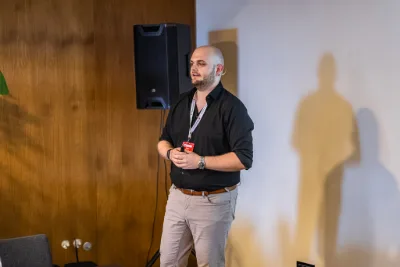
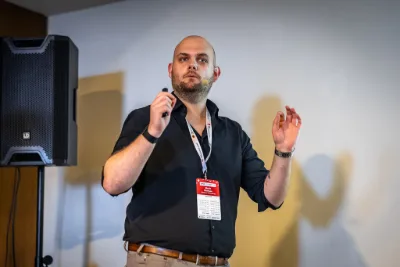
Marin Niehues, the founder of Stage Starter, has received more than 100 invitations and has spoken at more than 50 conferences in 30 countries. Sessionize lists him as a Most Active Speaker in 2024 and 2025. For him the list is a proof an organiser can check in seconds, because it follows from the number of conferences that said yes.
Setting up a Sessionize profile: five steps for more visibility
- Make the profile public: A private profile cannot appear in the annual list or in the directory, and listing in the directory is free according to Sessionize.
- State your field in one sentence: Write the short bio and the topics so that an organiser understands without asking back which audience you speak to and which problem you solve.
- Mark the calls that run on Sessionize: Note in your conference list which calls run through Sessionize, because only their acceptances appear in the ranking. When the conferences’ deadlines fall is shown in the call for papers calendar.
- Update the profile after every acceptance: Check that the event is listed, and link the profile in your speaker bio and on your website so that an organiser can reach your proven talks in one click.
- Plan submissions across the year: Decide how many conferences you approach each quarter and keep to that number after rejections, because only acceptances count in the list. If you want to start small, the article Meetups, user groups and barcamps as a way in shows stages with a low threshold.
Frequently asked questions
What is a Sessionize profile, and do I need one as a speaker?
A Sessionize profile is your entry on the Sessionize platform, through which many conferences run their call for papers. You create it when you submit to one of these conferences, and it goes with every later submission. Conferences with a different submission route do not require it, although the list only includes events that use Sessionize.
How do I get onto the Sessionize list of Most Active Speakers?
According to Sessionize the list contains the top 3 per cent of speakers with at least one accepted session in the year in question, which in 2025 was 1,163 people. The main criterion is the number of accepted events through Sessionize. Added to that are multiple sessions per event, shared sessions with co-speakers and the size of the event. A public profile is a precondition for your name to appear.
Do rejected submissions count for the Sessionize list?
No. Sessionize states on the page for the list that the number of submissions and declined sessions do not affect it. Only accepted events count for the ranking.
What is a call for papers?
A call for papers is the public invitation with which a conference collects talk proposals. Speakers submit an abstract in it, the short description of their talk, and a programme committee selects the programme from these.
Does a Sessionize profile in the Speakers Directory cost anything?
Listing in the Speakers Directory is free according to Sessionize. As of 13 January 2026 the directory showed more than 71,000 speakers, and organisers can search it for speakers for their conference or meetup.

Marin Niehues is a management consultant and international speaker. With Niehues Consulting he works with organisations from scale-ups to DAX 40 corporations, and on stage he has collected more than 100 international conference invitations.
All articles by Marin Niehues