

Speaker agency for cybersecurity experts
A speaker agency for cybersecurity experts researches security conferences, submits your talk to the call for papers in your name and supports you all the way to the stage. A call for papers is the public announcement with which a conference collects talk proposals, and a programme committee, the group that selects the programme, decides on every proposal, including those from experts without a well-known name. For security experts who want to win B2B clients through talks, this means a lot of work alongside the day job, because deadlines and forms differ from conference to conference, and so does the way a topic has to be framed. This article shows what the agency takes on, which security stages exist, how to handle confidential incidents and what working together costs.
A speaker agency for cybersecurity experts researches security conferences, submits your talk to the call for papers in your name and supports you all the way to the stage. A call for papers is the public announcement with which a conference collects talk proposals, and a programme committee, the group that selects the programme, decides on every proposal, including those from experts without a well-known name. For security experts who want to win B2B clients through talks, this means a lot of work alongside the day job, because deadlines and forms differ from conference to conference, and so does the way a topic has to be framed. This article shows what the agency takes on, which security stages exist, how to handle confidential incidents and what working together costs.
How does a security talk get into the programme through a call for papers?
A security talk gets into the programme when the programme committee sees the submitted abstract as a gain for its audience. The abstract is a short description of the planned talk, and a title and a short biography go with it. The committee reads and assesses the submissions and often replies only weeks or months after the call has closed. Community conferences in the security scene sometimes review anonymously, so only the content counts and no name helps. The article What is a call for papers? describes this process in detail.
For a security expert who wants to win clients through talks, this route has a practical advantage: the audience at a professional conference consists of people with a concrete problem at work, and a talk reaches them at the moment they are dealing with it. At the same time, every submission involves work that cannot be done in a lunch break, because the programme committee wants to see what the audience takes away from the talk, and it compares your proposal with many others.
Which security conferences are there in Germany?
Germany has three kinds of security stage, which differ in audience and selection process. The first are trade fairs with an attached congress, such as it-sa in Nuremberg, where security leads from companies and public bodies compare solutions. The second are community conferences such as BSides Munich, which fill their programme through an open call for papers and whose audience consists of practitioners, from penetration testers to security architects. The meetings of OWASP chapters in many German cities belong to the same family, and being smaller, they work well as a first stage.
The third kind are commercial professional conferences and industry events where security is one topic among several, for example conferences on cloud, manufacturing or finance with their own security track. For winning clients these are often the most valuable stages, because the decision makers who buy security sit there, even if they are not specialists themselves. Which kind suits you follows from your clients: anyone who wants to reach CISOs, the heads of information security, picks different stages from someone who advises managing directors of mid-sized companies.
What does a speaker agency for cybersecurity experts take on?
A speaker agency takes on the six tasks between your expertise and a place in the programme, and each of them takes time. This is the work Stage Starter takes on for you: we find the right calls, write the submission and submit it. First we develop the talk and the abstracts with you. Security knowledge is broad, and a talk topic has to be cut so that the programme committee sees a gain for its audience, for example an approach, an observation from practice or an assessment that transfers to other organisations. Next we research conferences whose topic and audience fit your offer, and we keep deadlines and new calls up to date. We submit in your name, each form according to the conference's requirements, we follow up until a decision is made, and after an acceptance we support you to the stage, from coordinating the technology to the speaker agreement.
What we need from you is your expertise and one approval. You approve the talk and the abstracts once before the start, and after that we submit without every single submission coming back to you. The conversations after the talk are yours, because it is your professional judgement that decides whether a contact turns into a client. How the work runs day to day is described in how a submission through an agency works, and the speaker agency guide gives the overview of services, models and costs.
Our analysis of 2,415 conferences that publicly invite talks for 2026 assigns 86 of them to the main topic of security, which is 3.6 per cent. General technology conferences and industry events that also accept security talks come on top, and that is often where the clients are. Because new calls appear and existing ones move their deadlines, continuous research is a fixed part of an agency's work.
Of the 2,189 abstracts we have submitted for clients, 1,374 have been decided, and 94 of those were accepted. Per conference we reach up to 19 per cent acceptances, whereas 5 per cent at most is typical in the market at this volume of submissions. The rate per conference is higher than the rate per abstract because we often submit several abstracts to one conference and a single acceptance is enough.
Why do security talks fail on a sales tone?
Security talks fail on a sales tone because a programme committee checks whether a proposal teaches the audience something, and it sorts out an abstract that reads like a service description as advertising. Security experts have knowledge that quickly convinces an audience, and an offer that slips easily into the talk. Where audiences draw the line is described in expert talk or sales pitch. Framing the talk is therefore the agency's first job, because it decides whether your knowledge is received as a contribution to the programme.
Confidentiality is a particular feature of the field. Experience from client engagements in security is usually covered by a non-disclosure agreement, and a talk still needs examples that convince the audience. You therefore speak about an incident from a client project only with the client's written consent or in a form so anonymised that neither company, industry, time frame nor system landscape allows conclusions. Vulnerabilities that have not been fixed belong on stage only after coordinated disclosure with the vendor. How much of it belongs in an abstract, and in what form, we clarify with you, and you approve the result before the start. This article provides an overview and does not constitute legal advice.
What does a speaker agency for security experts cost?
At Stage Starter, working together costs from €990 net per month, and for that the whole operation sits with us, from research to support on the way to the stage. With pay to speak, the speaker buys the slot from the organiser, and a single speaking slot quickly costs €10,000 or more, in the security market with its large vendor conferences more rather than less. Anyone who submits to the call for papers independently pays the organiser nothing and invests working time. What bought slots mean for the impact of a talk is covered in sponsored talks and pay to speak.
Security conferences generally pay no fee to speakers selected through the call for papers; they provide a ticket and sometimes cover travel costs. Paid talks exist mainly for well-known keynote speakers, who according to speaker bureaus and trade media receive €6,000 to €15,000 per talk. For a security consultant, a single engagement won through a talk is worth more than any fee, because a penetration test or an information security mandate exceeds a beginner's fee of €1,000 to €3,000 many times over. Stage Starter therefore brings you onto professional stages where your clients sit.
Who the model pays off for most
An agency pays off most for consultants and freelancers in security whose diaries are full of client work, whose assignments are of high value and whose acquisition has so far run on referrals. The calculation behind it is simple: at 7 per cent acceptance per abstract, an expert needs around 60 to 90 submitted abstracts for four to six talks a year, and the monthly fees come to €11,880 net over twelve months. If one client won brings in more revenue than that sum, a single engagement covers the fees for a year.
Anyone who writes submissions alone keeps days free for it regularly, and that time cost belongs in the calculation against the flat fee. Security consulting is bought on trust, and a talk in front of the right audience shows your professional judgement before the first sales conversation takes place.
Frequently asked questions
Is there a speaker agency for cybersecurity experts?
Yes, Stage Starter is a speaker agency for experts and also works for security professionals. We research conferences by topic and audience, then develop the talk and the abstracts with you and submit in your name.
How do I find a security conference with a call for papers?
Security conferences publish their calls on their own sites and on submission platforms, and deadlines vary widely. There is no central list, so an agency maintains its own conference database and checks for each conference whether your clients attend. Because deadlines shift and new calls appear, continuous research is part of an agency's work.
Which cybersecurity conferences are there in Germany?
Well-known examples are it-sa in Nuremberg, a trade fair with a congress, and BSides Munich, a community conference with an open call for papers. On top of these come the meetings of OWASP chapters and many industry events with their own security track. For winning clients, the stages that count most are the ones attended by decision makers who buy security.
How many security conferences are there?
Among 2,415 conferences that publicly invite talks for 2026, our analysis finds 86 with security as the main topic. General technology conferences and industry events that include security talks in their programme come on top.
Can I talk about confidential incidents from client projects?
You talk about an incident from a client project only with the client's written consent or in a form that allows no conclusions about the company. Non-disclosure agreements and the protection of trade secrets apply on stage too. Vulnerabilities belong in a talk only after coordinated disclosure with the vendor.
How do I win clients as an IT security consultant?
As an IT security consultant you win clients mainly through trust, that is through referrals and visible professional judgement. A professional talk in front of security leads shows that judgement to many potential clients at once, and the conversations afterwards are the way into engagements. A speaker agency makes sure you stand on such stages regularly without writing the submissions yourself.
What does a speaker agency for security experts cost?
At Stage Starter, working together starts from €990 net per month. The Speaker Audit beforehand costs from €2,000 net and is credited if you book the agency. By comparison, a bought speaking slot quickly costs €10,000 or more for a single talk.
Can an agency guarantee a talk at a security conference?
No agency can guarantee an acceptance, because the programme committee of the conference decides. An agency steers the number of submissions, the quality of the abstracts and the choice of conferences. Per conference we reach up to 19 per cent acceptances, while 5 per cent at most is typical in the market at this volume of submissions.
Which security stages suit your topic and what the submission work would look like for you, we clarify in a first conversation.

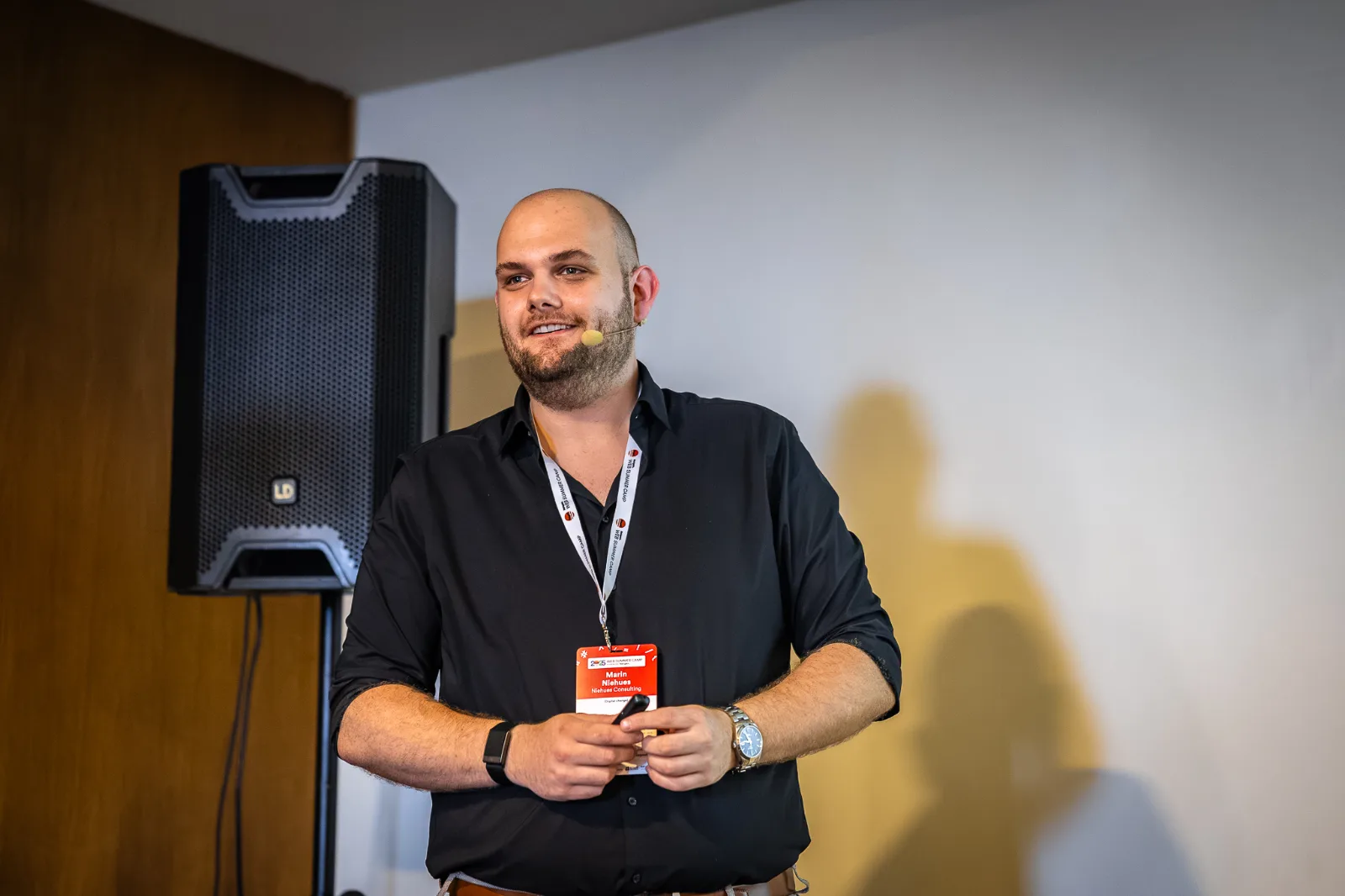
Marin Niehues is a management consultant and international speaker. With Niehues Consulting he works with organisations from scale-ups to DAX 40 corporations, and on stage he has collected more than 100 international conference invitations.
All articles by Marin Niehues